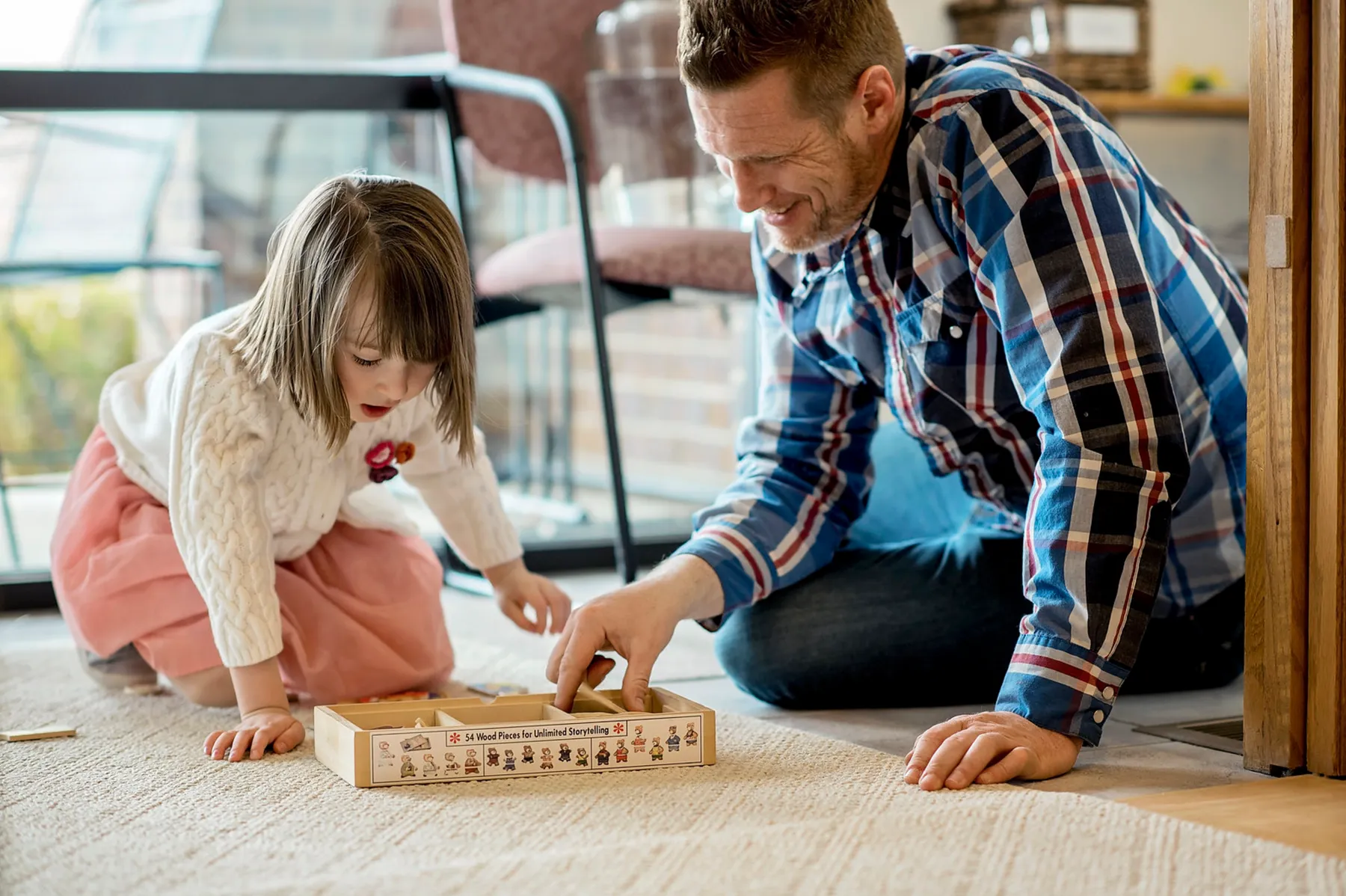
Every child needs a way to communicate what they want, what they need, and when something does not feel right. Some children communicate with spoken words, while others use gestures, signs, pictures, or communication devices.
When a child does not yet have an easy way to communicate, their behavior may begin communicating for them. A child might scream when they need help, drop to the floor when an activity feels overwhelming, or push materials away when they are finished.
Functional Communication Training, often called FCT, is an ABA approach that teaches children a clearer and more effective way to express those needs. This approach is supported by decades of behavior-analytic research and is described in Tiger, Hanley, and Bruzek’s (2008) review of 91 published studies.
Behavior May Be Communicating Something
When a child engages in a challenging behavior, it is important to look beyond what the behavior looks like and consider what the child may be trying to communicate. The child may be asking for help, requesting a break, seeking attention, trying to obtain a preferred item, leaving an overwhelming environment, indicating discomfort, or communicating that they are finished.
For example, imagine that a child screams whenever schoolwork becomes difficult. The screaming may be the child’s current way of asking for help or requesting a break.
Instead of focusing only on stopping the screaming, an ABA provider works to understand the need behind it. The child can then learn a clearer response, such as saying “help,” pointing to a break card, using a sign, or selecting an option on a communication device.
Understanding the Reason Behind a Behavior
In ABA, the reason a behavior is happening is often called its “function.” Before teaching a new communication skill, the ABA team gathers information about what happens before and after the behavior. This may include observing the child, talking with caregivers, and collecting information during everyday activities.
Understanding the reason matters because two children may display the same behavior for very different reasons. One child may cry because they need help, while another may cry because the noise or demands have become overwhelming. Each child may need to learn a different communication skill.
Tiger and colleagues (2008) explained that Functional Communication Training is most effective when the new communication response meets the same need as the original behavior.
Choosing the Right Way to Communicate
Functional communication does not have to involve spoken language. Depending on the child, communication may include a word, short phrase, sign, gesture, picture card, or speech-generating device.
The communication response should fit the child’s current abilities. It should also be simple enough for the child to use during a difficult or frustrating moment.
For example, expecting a child to say, “May I please have a break from this activity?” may be too difficult when the child is already overwhelmed. Saying “break,” pointing to a break card, or selecting “break” on a device may be more realistic.
Research suggests that children are more likely to use new communication when it is easier than the behavior it is replacing and when other people can recognize and respond to it (Tiger et al., 2008).
More advanced communication can be developed over time. The first priority is helping the child learn that communicating works. Helping the Child Experience Success During the early stages of teaching, adults respond to the child’s new communication consistently whenever possible. If the child appropriately asks for help, an adult provides help. If the child asks for a break, the adult initially provides a break. These experiences teach the child that communication is a reliable way to have their needs understood.
Some children may need prompting while learning. A therapist might model the word “help,” point toward a picture card, or guide the child toward their communication device. These prompts are gradually reduced so the child can communicate independently. The goal is for the child to begin using communication before becoming overwhelmed.
Learning to Wait
Families cannot always provide everything immediately. A parent may be cooking, driving, caring for another child, or waiting for an activity to become available.
After the child learns that communication works, the ABA team may gradually teach waiting and flexibility. A child who requests a break might first receive it immediately. Later, the child may practice finishing one small step before taking the break.
Waiting should be introduced slowly. If adults suddenly stop responding to the child’s new communication, the child may return to the behavior that worked in the past. The child first needs to trust that communication is effective. Waiting, completing activities, and accepting delays can then be introduced in manageable steps.
Practicing in Everyday Life
A communication skill is most helpful when the child can use it outside of therapy. A child may learn to request help from a therapist but still need practice using the same skill with parents, teachers, siblings, or other caregivers. The skill may also need to be practiced at home, at school, and in the community.
Caregivers can support this process by recognizing communication attempts and responding consistently. The ABA team may also collaborate with teachers, speech-language pathologists, and other professionals to support the child’s communication system across settings.
Communication Is About More Than Requesting Items
Functional communication includes asking for toys, food, or preferred activities, but it should go beyond requesting things. Children also need ways to say “no,” ask someone to stop, request space, express discomfort, ask for comfort, make choices, share enjoyment, and communicate that they are finished.
These skills can support safety, independence, relationships, and self-advocacy. A respectful ABA program should help a child become more understood—not simply more compliant. Asking for a break, rejecting something unwanted, and communicating personal boundaries are valuable skills.
Could Functional Communication Be a Helpful Goal? Functional communication may be helpful when a child frequently becomes frustrated because others do not understand them or relies on challenging behavior to request help, attention, breaks, or preferred activities. Every child is different. An individualized assessment helps the ABA team understand the child’s current communication skills, the needs behind their behavior, and which goals would be most meaningful.
At Lighthouse ABA, our team develops individualized communication goals based on each child’s strengths, needs, and everyday experiences. We work with caregivers and other professionals to help children use their communication skills across meaningful people, routines, and environments.
Contact Lighthouse ABA to learn more about functional communication and whether ABA services may be appropriate for your child!
Reference Tiger, J. H., Hanley, G. P., & Bruzek, J. (2008). Functional communication training: A review and practical guide. Behavior Analysis in Practice, 1(1), 16–23. https://doi.org/10.1007/BF03391716